


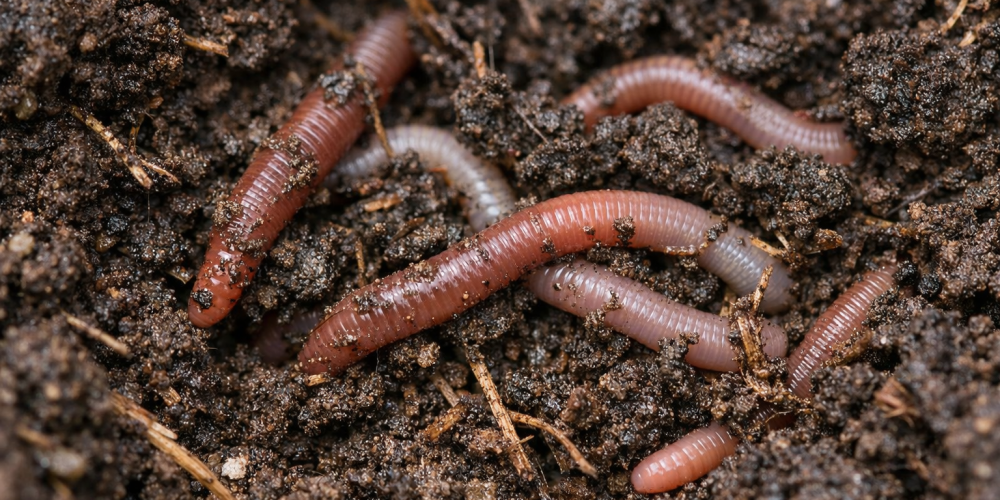
Healthy soil is alive. One of the simplest ways to measure this life is by counting earthworms. Earthworms are natural soil engineers, improving structure, fertility, and water movement. Their presence and abundance provide a direct measure of soil health, making the earthworm count a practical tool for farmers and trainers.
Purpose of the Test
The earthworm count is designed to evaluate biological activity in the soil. By digging a small section of land and counting the worms present, farmers can quickly determine whether their soil is fertile, resilient, and capable of supporting crops. This test requires no laboratory equipment and relies only on observation.
Field Application
The test is conducted directly in crop fields, gardens, or plots where soil health matters most. To ensure accuracy, farmers should sample from several representative spots across the farm rather than relying on a single location. Avoid unusual patches such as paths, compost heaps, or compacted corners, as these do not reflect the true condition of the field.
Timing of the Test
Earthworms are most visible when the soil is moist. The rainy season or periods following irrigation are ideal for conducting the test. Very dry or hot conditions should be avoided, as worms burrow deeper and may not be detected. Performing the test at the beginning of a planting season provides valuable insights for crop planning.
Significance of the Test
Earthworms are often referred to as “ecosystem engineers.” Their presence indicates that the soil contains sufficient organic matter, maintains a healthy moisture balance, and has a structure that supports root growth. A high worm count signals fertile, resilient soil, while a low count warns of compaction, poor organic matter, or chemical stress.
Procedure
To conduct the test, mark out a square of soil measuring approximately 30 cm by 30 cm. Dig down to a depth of 20 cm and place the soil on a sack or sheet. Break the soil apart gently by hand and count the earthworms, distinguishing between adults and juveniles. Record the number and repeat the process in several spots across the farm. Average the counts to obtain a reliable measure of earthworm population.
Interpretation of Results
A soil sample with: –
- very few worms, between zero and two, suggests poor fertility, compaction, or lack of organic matter.
- a moderate count of three to ten worms indicates fair soil that can be improved with organic inputs and reduced tillage.
- a high count of more than ten worms reflects biologically active, fertile, and well‑structured soil that is excellent for crop growth.
Conclusion
The earthworm count is a simple, farmer‑friendly test that provides immediate insights into soil health. It guides farmers toward practical remedies such as adding compost, reducing compaction, and improving moisture management. By observing these living indicators, communities can build resilient soils that sustain crops and livelihoods, ensuring long‑term agricultural productivity.

