


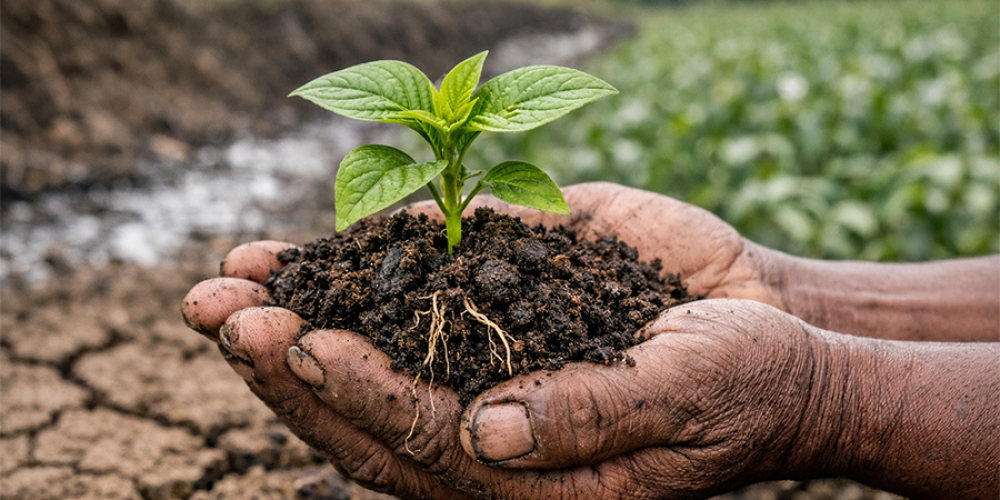
Soil is the heartbeat of farming. When it thrives, crops flourish; when it fails, farmers struggle. Scientists may rush to laboratories with test tubes and microscopes, but farmers have always had their own ways of reading the land. Over the weekend, I was priviledged to attend a women’s group monthly meeting, Twatumwa Womens group in Kabarole District. We talked about many things but one thing caught my eye … i asked them how they tell if soil is “bad” without any lab tests. Their answers were vivid, practical, and full of wisdom. As one farmer laughed, “The soil itself tells you. You just have to listen.”
Cracked and Slippery Soil
The women began with the most obvious sign: cracking. “If in the rainy season the soil is slippery and you fall down, then in the dry season it cracks and floods, that soil is bad,” one explained. To them, good soil, during the rainy season, when one steps on it, your foot must sink and not slide!! Cracks mean the soil expands and contracts too much, leaving gaps that roots cannot bridge. Slippery patches during the rains are just as dangerous, trapping water and suffocating crops.
But farmers don’t stop at diagnosis; they act. To mend cracked soils, they sprinkle Olusenyonto (charcoal dust) into the fields. They believe it helps bind particles and improve structure. They also dig trenches to guide water away, preventing floods and giving roots a chance to breathe. It’s a simple, local remedy, but it works.
Runoff and Erosion
Another farmer leaned forward and added: “If you don’t dig trenches, you will not manage. The water will take everything away.” She was talking about sheet erosion, when rainwater sweeps across the garden, carrying away the precious topsoil. Without that top layer, crops starve.
Farmers fight erosion with trenches, contour planting, and mulching. This is irrespective of whether your farmis on a slope or flat land, they emphasized. Trenches slow the water, contour rows hold it back, and mulching shields the soil from pounding raindrops. These practices keep nutrients where they belong … in the garden, not washed into the valley ot to another persons land.
Yellowing Leaves
Fruit trees, they said, are the best messengers. “If you see the leaves of all the fruit trees turning yellow, then you know the soil is bad,” one woman explained. Yellow leaves are a cry for help, often signaling nitrogen deficiency or poor soil fertility.
Their cure is straightforward: manure. “Pour manure around it, nd remove all the weeds around, and the colors will come back,” they told me. Organic matter revives the soil, feeds the microbes, and restores the green vibrancy of leaves. It’s a cycle of giving back to the land so the land can give back to you.
Sickly Plants
Healthy soil grows healthy plants. Bad soil breeds sickness. One farmer put it bluntly: “If the plants fall sick all the time, that is bad soil.” Repeated disease outbreaks are not just bad luck; they are signs of soil exhaustion, compaction, or imbalance.
Farmers respond by rotating crops, altering chemical inputs for compost. Rotation breaks pest cycles, compost strengthens plants, and less chemical stress allows soil life to recover. It’s a holistic approach: heal the soil, and the plants will heal themselves.
Roots Tell the Truth
The women insisted that roots are the underground truth‑tellers. “When you plant, pull one or two crops and look at the roots,” they advised. Roots should be firm, white, and branching. But in bad soil, they are thin, blackened, swollen, or covered in strange growths.
When roots look sick, farmers know the soil is suffocating. They loosen compacted ground, add organic matter, and improve drainage. Healthy roots mean healthy harvests, and farmers never ignore what the roots reveal.
The Color of Soil
Good soil, they said, must be dark. “When you continuously add manure, the soil becomes dark,” one farmer explained. Dark soil means organic matter, fertility, and life.
But they were quick to warn that not all dark soils are equal. Clay can also be dark, but it behaves differently. “With clay soil, when you pour water, it will slide and hold. But good dark soil must let water pass through,” they clarified. Fertile soil is crumbly, loose, and well‑drained, not sticky and suffocating.
Texture and Feel
Farmers don’t just look at soil; they feel it. “It should be loose and crumbly, not hard particles,” they said. Soil that crumbles easily allows roots to spread, water to infiltrate, and microbes to thrive. Soil that clumps like cement is a warning sign of compaction and poor health.
To restore texture, farmers mix in compost, add charcoal dust, avoid over‑tilling, and/or keep soil covered with mulch. They know that soil is not just dirt … it is a living sponge that must be cared for.
Other Farmer’s Wisdom
They shared loads of other clever tricks.
- They dig small patches to count earthworms, knowing that worms mean life.
- They smell the soil, trusting the earthy scent of healthy ground and fearing sour or rotten odors.
- They pour water to see how it infiltrates … sandy soils gulp it down, clay soils hold it forever, and loam lets it soak in steadily.
- They watch crop performance: tall, green maize means strong soil; stunted plants mean weakness.
As one farmer said, “The soil should be alive. If it is dead, nothing will grow.”
Why This Matters
Listening to these women reminded me of the proverb: “When an elder dies, a library burns.” Their insights are living libraries. If we don’t record them, they risk being lost. In an era of climate change and soil degradation, preserving indigenous wisdom is as important as introducing new technologies.
Modern soil science agrees with much of what they said. Cracks, erosion, yellow leaves, sick plants, poor roots, and soil color all align with measurable indicators like organic matter, pH, and nutrient levels. But farmers don’t need a lab to see these things. They read the land with their eyes, hands, and hearts.
Conclusion
Soil health is not just about numbers on a lab report. It’s about listening to the land. Farmers know when soil is sick: when it cracks, when water runs away, when leaves yellow, when roots shrivel. And they know how to heal it: with manure, charcoal dust, trenches, compost, and care.
Their wisdom is practical, poetic, and powerful. By documenting and sharing these voices, we safeguard indigenous knowledge before it is “burnt down.” And by combining it with modern science, we build soils that are fertile, resilient, and ready to feed generations.

