


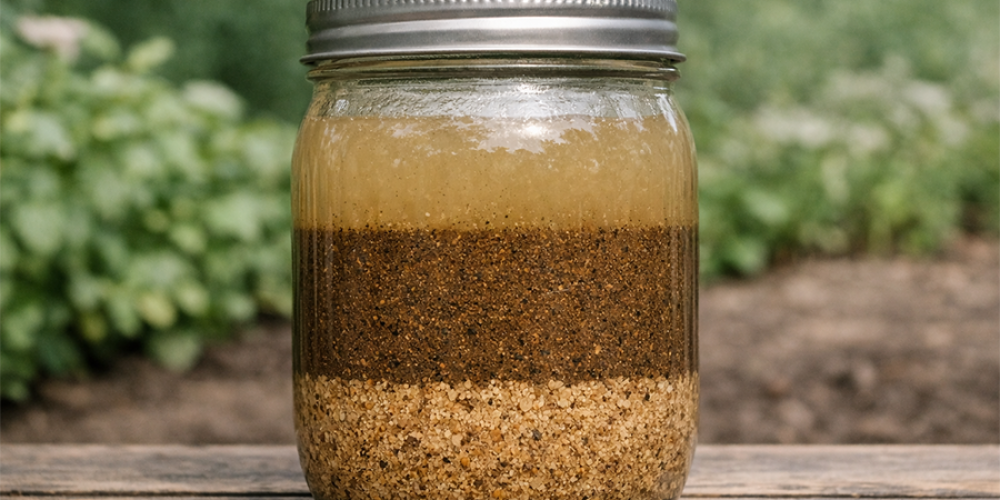
Healthy soil is the foundation of productive farming. Yet many farmers struggle to know whether their soil is sandy, clayey, or loamy without expensive laboratory tests. The soil jar test is a simple, low‑cost method that allows farmers to see the proportions of sand, silt, and clay in their soil using nothing more than a clear jar, water, and patience.
Preparing for the Test
To begin, collect soil from your field. Dig about 10–15 centimeters below the surface to avoid organic matter like roots and leaves. Mix soil from different spots so the sample represents the whole field. Place this soil into a clean, transparent jar, a one‑liter jar works well. Remove stones and debris, leaving only fine soil particles.
Mixing Soil and Water
Fill the jar about one‑third with soil, then add clean water until the jar is nearly full. Close the lid tightly and shake the jar vigorously for two to three minutes. The goal is to suspend all soil particles in the water so they can settle naturally.
Watching the Soil Settle
Once the jar is placed on a flat surface, the soil begins to separate into layers. Sand, being the heaviest, settles first within a minute. Silt follows after a few hours, and clay, the finest particle, may take up to two days to settle. As time passes, you will see distinct layers forming inside the jar.
Measuring and Understanding the Layers
When the soil has fully settled, measure the thickness of each layer. Compare the size of the sand, silt, and clay layers to the total soil depth in the jar. This gives you the percentage of each component. For example, if the jar shows 50% sand, 30% silt, and 20% clay, the soil is sandy loam.
What the Results Mean
- Sandy soils drain quickly but hold fewer nutrients.
- Clay soils retain water but can be heavy and compact.
- Loam soils — a balance of sand, silt, and clay — are ideal for most crops.
Knowing your soil type helps you decide which crops to plant, how much water to use, and what amendments (like compost or manure) will improve fertility.
Troubleshooting the Jar Test
Sometimes the layers don’t settle clearly or appear mixed. This usually means the soil particles didn’t separate properly … but it’s easy to fix.
Cloudy or Mixed Layers: Remove roots and stones, add a drop of dish soap, shake longer, and let the jar rest for 48 hours.
Clay Layer Missing: Use warm water, add a pinch of baking soda or vinegar, shake again, and wait longer.
Thin Sand Layer: Try a fresh sample from another part of the field, especially avoiding compacted or waterlogged spots.
No Separation at All: Use a larger jar, add more water, shake longer, and let it sit up to 72 hours.
Floating Organic Matter: Skim off debris or sieve the soil before testing.
Patience is key — some soils, especially clay‑rich ones, take several days to settle.
Remedies for Different Soil Types
When the Soil Has Too Much Clay
Clay soils hold water and nutrients but drain poorly. Improve them by adding compost or manure, mixing in river sand, practicing deep tillage and mulching, and planting legumes like cowpeas or mucuna to loosen the soil.
When the Soil Has Too Much Sand
Sandy soils drain quickly but lose nutrients. Remedy this by adding organic matter, mixing in clay‑rich topsoil, applying mulches to reduce evaporation, and using slow‑release fertilizers to prevent nutrient loss.
When the Soil Has Too Much Silt
Silty soils are fertile but compact easily. Improve them by adding coarse sand and organic matter, avoiding over‑tilling, and planting cover crops to stabilize and enrich the soil.
When the Soil Is Balanced but Weak
Even loam soils need care. Maintain fertility by adding compost, rotating crops, and preventing erosion with mulching or contour planting.
Long‑Term Soil Improvement
Improving soil texture is gradual. Consistent organic matter addition, crop rotation, and good management build living soil that is dark, crumbly, and resilient. The goal is not overnight change but steady improvement that supports roots, microbes, and moisture balance.
Why the Jar Test Matters
This simple test empowers farmers to understand their soil without laboratories. It combines indigenous knowledge with agroecology, giving farmers practical insights into soil health. With this knowledge, farmers can make smarter crop choices, improve food security, and build resilience against climate challenges.
Conclusion
The soil jar test is more than a demonstration … it is a tool of empowerment. By observing how soil behaves in water and learning how to improve it, farmers gain the confidence to manage their land wisely. Every jar tells a story about the farm’s future, guiding decisions that lead to stronger harvests and healthier communities.

